
Really That Good — Or Too Good To Be True?
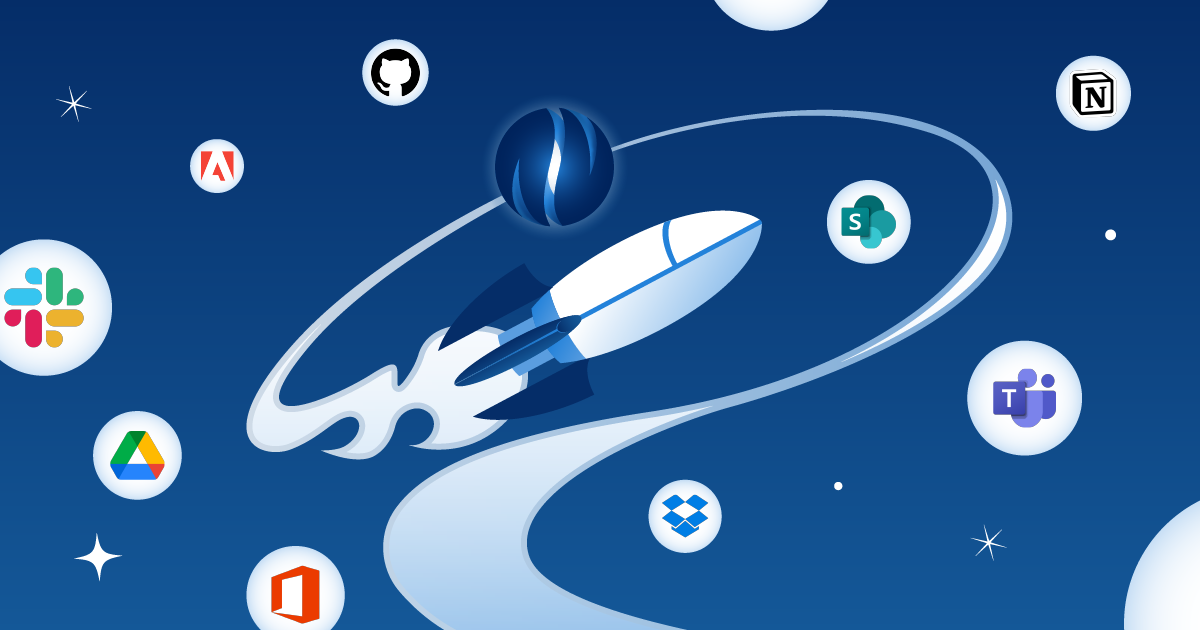
Rocket connecting Microsoft, Google Drive, Slack, Dropbox, and other platforms into a unified AI data layer powered by NVOY.
AI is everywhere.
Copilot. Gemini. ChatGPT.
Everyone says it saves time. Everyone says it changes everything.
Yet most companies still cannot find the right file.
The real problem is not AI.
The real problem is fragmented data.
Files live in SharePoint.
Some in Google Drive.
Others in Dropbox.
Old material on network drives.
Local files on laptops.
Conversations in Slack or Teams.
AI cannot be better than the data it sees.
And in most organizations, the data is scattered.
The Illusion of “We Already Have AI”
Many companies say:
“We already use Copilot.”
“We use Gemini.”
“We have built internal AI tools.”
That is good.
But those tools work best inside their own ecosystem.
Microsoft works well inside Microsoft.
Google works well inside Google.
But companies rarely live in one ecosystem.
When data is split across systems, AI becomes partial.
Partial answers create partial trust.
What If AI Was Built on Your Entire Data Landscape?
The value of a company is not in generic AI.
It is in its accumulated internal material over time.
Project files.
Drawings.
Contracts.
Reports.
Emails.
Presentations.
Historic decisions.
If that material is normalized, structured, and searchable —
AI becomes reliable.
That is where NVOY sits.
Not as another AI tool.
Not as another storage system.
But as a unified searchable data layer across all your existing systems.
No file migration.
No new silo.
Just one interface across everything.
What Changes When It Works
You stop asking:
“Where is that file?”
You stop recreating material that already exists.
You stop guessing which version is correct.
Instead:
You search by what is inside the file.
You preview before opening.
You summarize instantly.
You share with control.
AI becomes specific to your company.
Not generic.
So… Is It Too Good To Be True?
No.
It is not magic.
It is structure.
When internal data becomes structured and unified,
AI finally works the way companies expected from the beginning.
The question is not whether AI is powerful.
The question is whether your internal data is ready for it.
